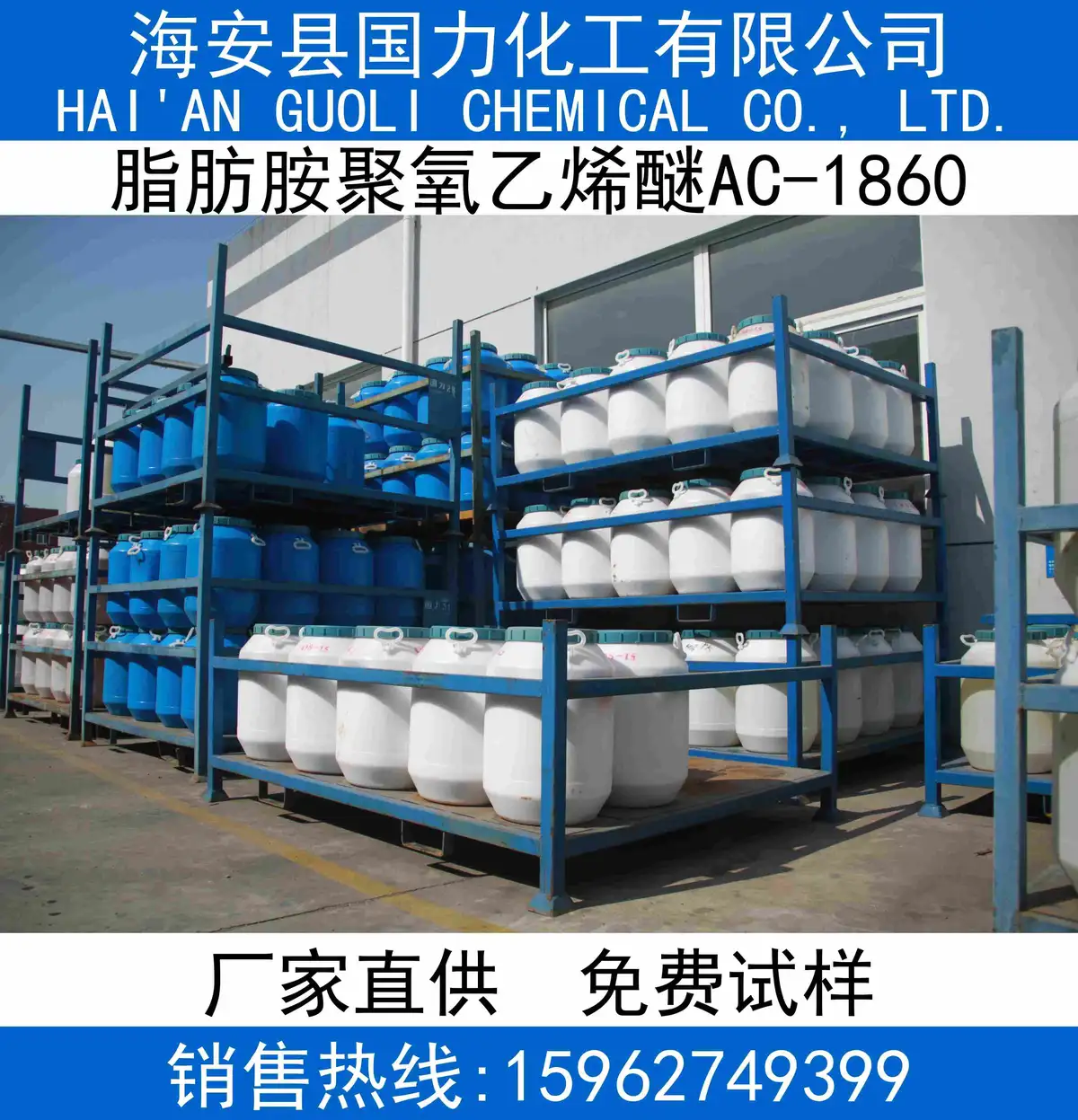
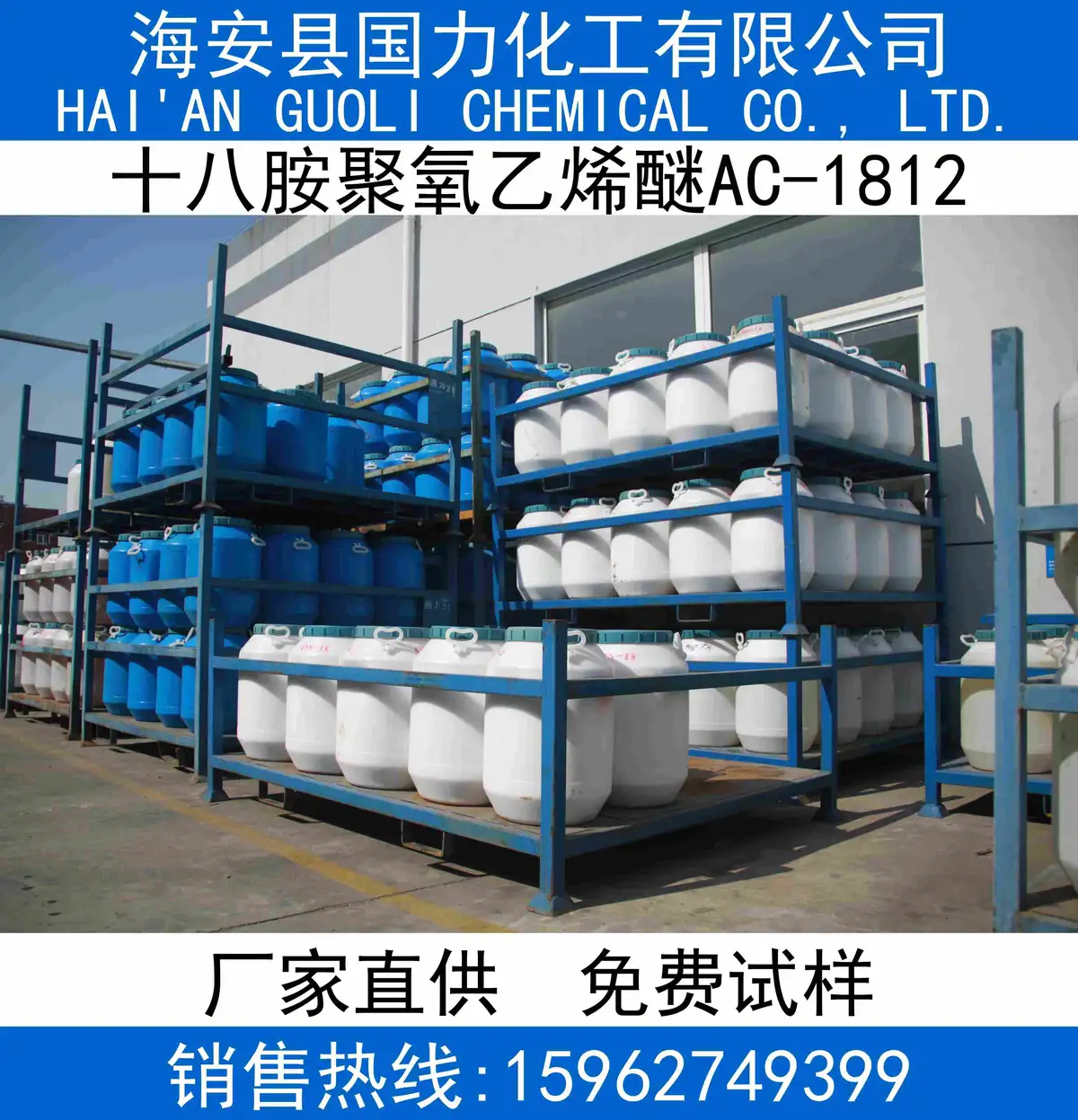
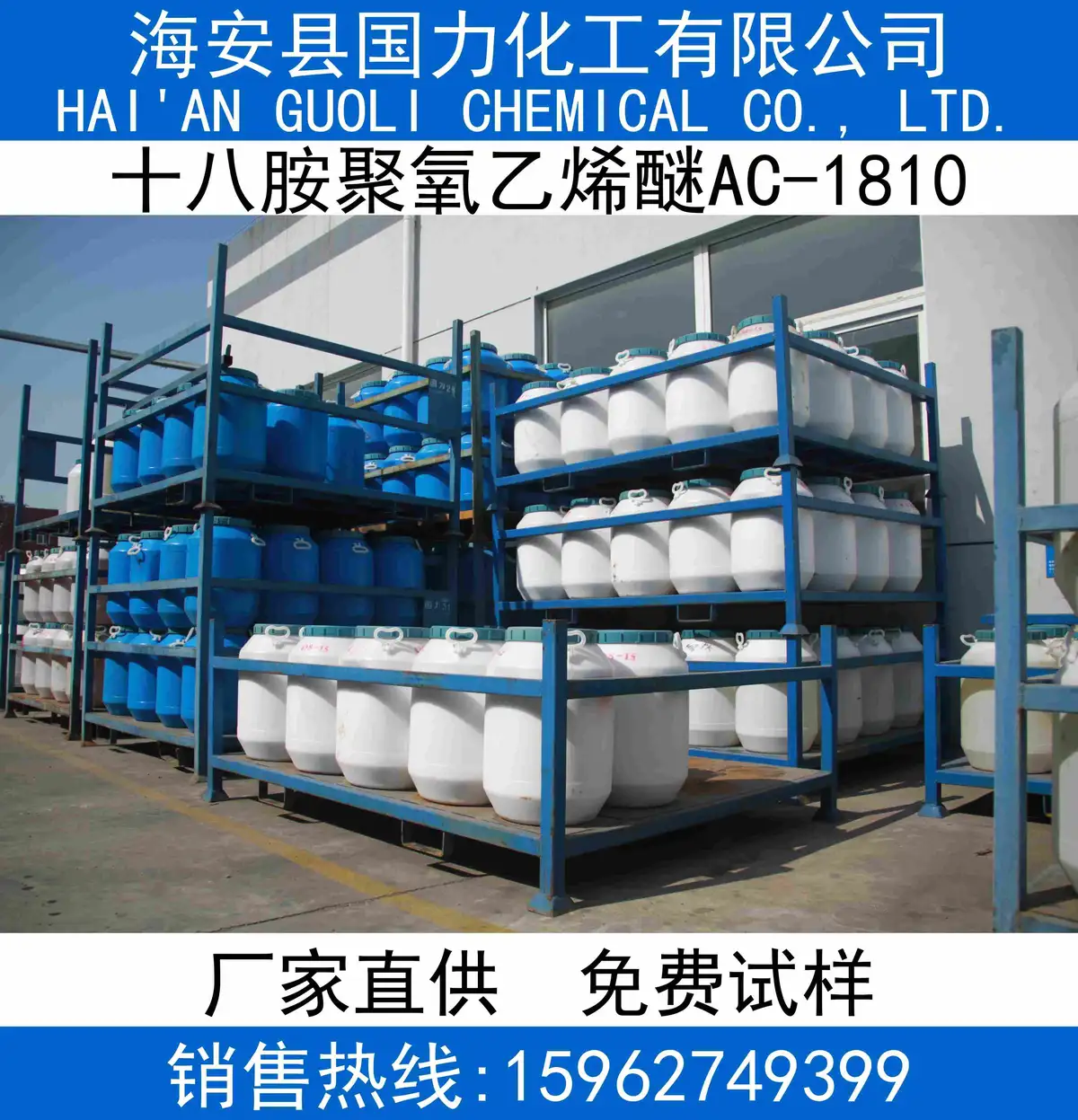
Fatty Amine Ethoxylate AC-1860 is an ultra-high ethoxylation degree fatty amine-based nonionic surfactant with excellent emulsifying, dispersing and antistatic properties.
Fatty Amine Ethoxylate AC-1860 is an ultra-high ethoxylation degree fatty amine-based nonionic surfactant offering excellent emulsifying, dispersing and antistatic properties. Mainly used as a textile high-temperature leveling and dyeing auxiliary.
Amine Ethoxylate Applications
Textile auxiliary: Antistatic agent, leveling agent and softener in fiber processing and fabric finishing.
Corrosion inhibitor: Metal protection in acidic cleaning and pickling formulations.
Asphalt emulsifier: For cationic asphalt emulsion in road construction.
Product Properties
Property
Value
CAS No.
26635-92-7
Molecular Formula
C₁₈H₃₇N[(CH₂CH₂O)₃₀H]₂ (avg.)
Appearance
Light yellow to yellowish-brown solid (or paste depending on temperature)
Ionic Type
Nonionic
Avg. Molecular Weight
Approx. 2913
Cloud Point
>100°C
Active Content
≥99
pH Value(1%)
6.0~8.0
pH Value(5%)
6.0~8.0
Iodine Value
≤2 g I₂/100g
Solubility
Readily soluble in water and organic solvents
Surface Tension
~30 mN/m (1%aq. soln.,25°C)
CMC
~0.001 g/L (25℃)
Acid Value
≤1 mg KOH/g
Saponification Value
≤2 mg KOH/g
Hydroxyl Value
36~40
Moisture
≤1%
Density
~1.0 g/cm³ (20°C)
Refractive Index
1.456 (50°C,molten)
Flash Point
>200°C (closed cup)
Hygroscopicity
Low
Chemical Stability
Stable under normal conditions
Amine Value
≤5
Tertiary Amine Content
≥95
Foam Property
Low foam
Alkali Resistance
Very good
Unsaturation
0 mmol/kg
Melting Point
~35~45°C
Solid Content
≥99%
Heavy Metal
≤10 mg/kg
Arsenic
≤2 mg/kg
Fatty Amine Polyoxyethylene Ether AC-1860 Safety Information
1. Product Identification and Physical/Chemical Properties
Chemical Name: Fatty amine polyoxyethylene ether
Product Model: AC-1860
Appearance: Colorless to pale yellow transparent liquid
Flash Point (closed cup): > 150 °C
Auto-ignition Temperature: > 200 °C
pH Value (1% aq. soln.): 6.0 – 8.5
Solubility: Readily soluble in water and various organic solvents
Operators shall be professionally trained and familiar with the hazardous properties and protective measures of this product.
The work area shall be well ventilated; airborne concentrations shall be kept below occupational exposure limits.
Appropriate personal protective equipment shall be worn during handling, including but not limited to: chemical safety goggles, chemical-resistant gloves (e.g. butyl rubber or nitrile rubber), protective clothing and safety shoes. When ventilation is inadequate or splash risk exists, wear a face shield or respiratory protection.
Avoid direct contact with skin, eyes and clothing. Avoid inhalation of vapors, mists or dust.
After handling, thoroughly clean face and hands, remove contaminated clothing, and clean before reuse.
Eating, drinking or smoking is strictly prohibited in the work area.
Avoid discharging large quantities into water bodies or the environment. Containers shall be properly disposed of after use in accordance with relevant regulations.
4. Storage Conditions
Store in a cool, dry, well-ventilated dedicated warehouse or tank. Keep away from heat sources, sparks and open flames.
Recommended storage temperature range: 10 °C – 35 °C. Avoid freezing and prolonged high-temperature exposure.
Store separately from strong oxidizers and strong acids; avoid contact.
Storage areas shall be equipped with spill containment facilities (e.g. spill trays) and emergency treatment equipment.
Packaging container materials shall be corrosion-resistant such as stainless steel, polyethylene or plastic-lined steel drums. Avoid using copper, aluminum or other metal containers.
Comply with local chemical storage regulations and standards.
5. Emergency Measures
Inhalation: Immediately move victim to fresh air, keep airway clear. If breathing is difficult, administer oxygen. Seek medical attention.
Skin Contact: Immediately remove contaminated clothing, flush thoroughly with plenty of running water and soap for at least 15 minutes. If irritation persists, seek medical attention.
Eye Contact: Immediately lift eyelids and flush thoroughly with plenty of running water or saline for at least 15 minutes while rotating the eyeballs. Seek medical attention immediately.
Ingestion: Rinse mouth with water; do not induce vomiting. Seek medical attention immediately and show this Safety Information or container label.
Spill Handling: Evacuate non-essential personnel, isolate spill area. Small spills can be absorbed with inert adsorbent materials (e.g. sand, vermiculite) and collected in closed containers. Large spills shall be diked; use explosion-proof pumps to transfer to emergency containers or recovery equipment. Prevent entry into sewers, surface water and groundwater.
Fire Emergency: This product is non-flammable, but may produce toxic gases upon decomposition at high temperatures. Extinguishing media: water mist, alcohol-resistant foam, dry powder or carbon dioxide. Firefighters shall wear full protective clothing and self-contained breathing apparatus.
Irritation: Moderately irritating to skin and eyes; may cause redness, pain and discomfort.
Ecotoxicology: Toxic to aquatic organisms. Acute fish toxicity LC50 (96 h): 1–10 mg/L. May cause long-term adverse effects in the aquatic environment.
7. Disposal Considerations
Waste shall be disposed of in accordance with local, regional and national laws and regulations. Do not discharge directly into the environment.
Recommended treatment methods: chemical treatment, high-temperature incineration etc., performed by qualified professional organizations. During incineration, prevent formation of nitrogen oxides and other harmful gases.
Packaging containers, if to be recycled, shall be thoroughly cleaned with residues removed. Non-recyclable containers shall be disposed of as hazardous waste.
8. Other Information
This information is compiled based on available data and reliable literature, provided for safe handling reference only. It does not replace the user's independent risk assessment.
For matters not covered herein, please refer to the product Safety Data Sheet (SDS) or contact the manufacturer for the latest version.