Quick Penetrant T-50 is a standard sodium dioctyl sulfosuccinate anionic penetrant with rapid wetting, good permeability and low foam.
Quick Penetrant T-50 is a standard sodium dioctyl sulfosuccinate anionic penetrant with rapid wetting, good permeability and low foam. Used in textile pretreatment, papermaking, pesticide spray adjuvants and leather processing.
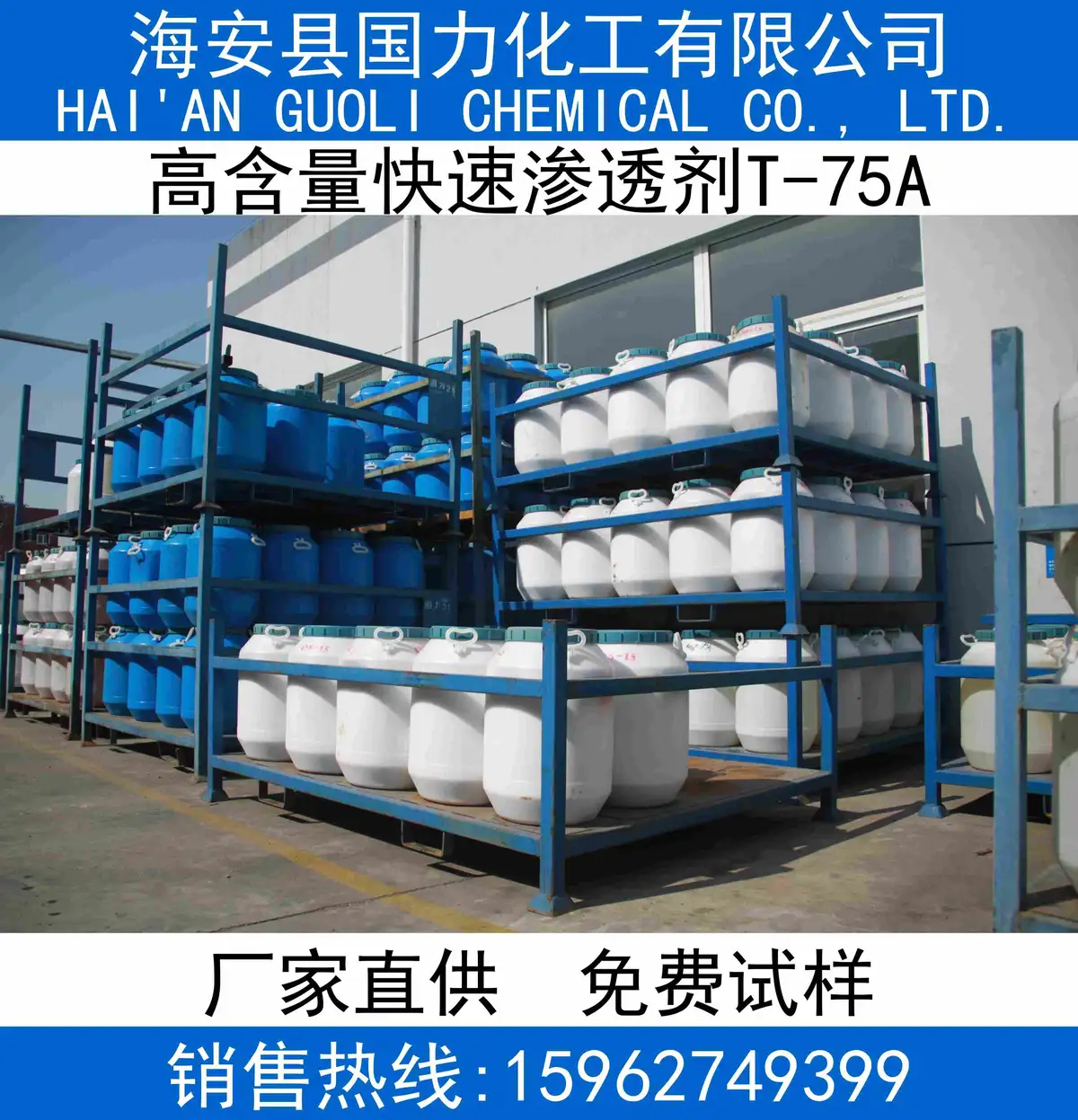
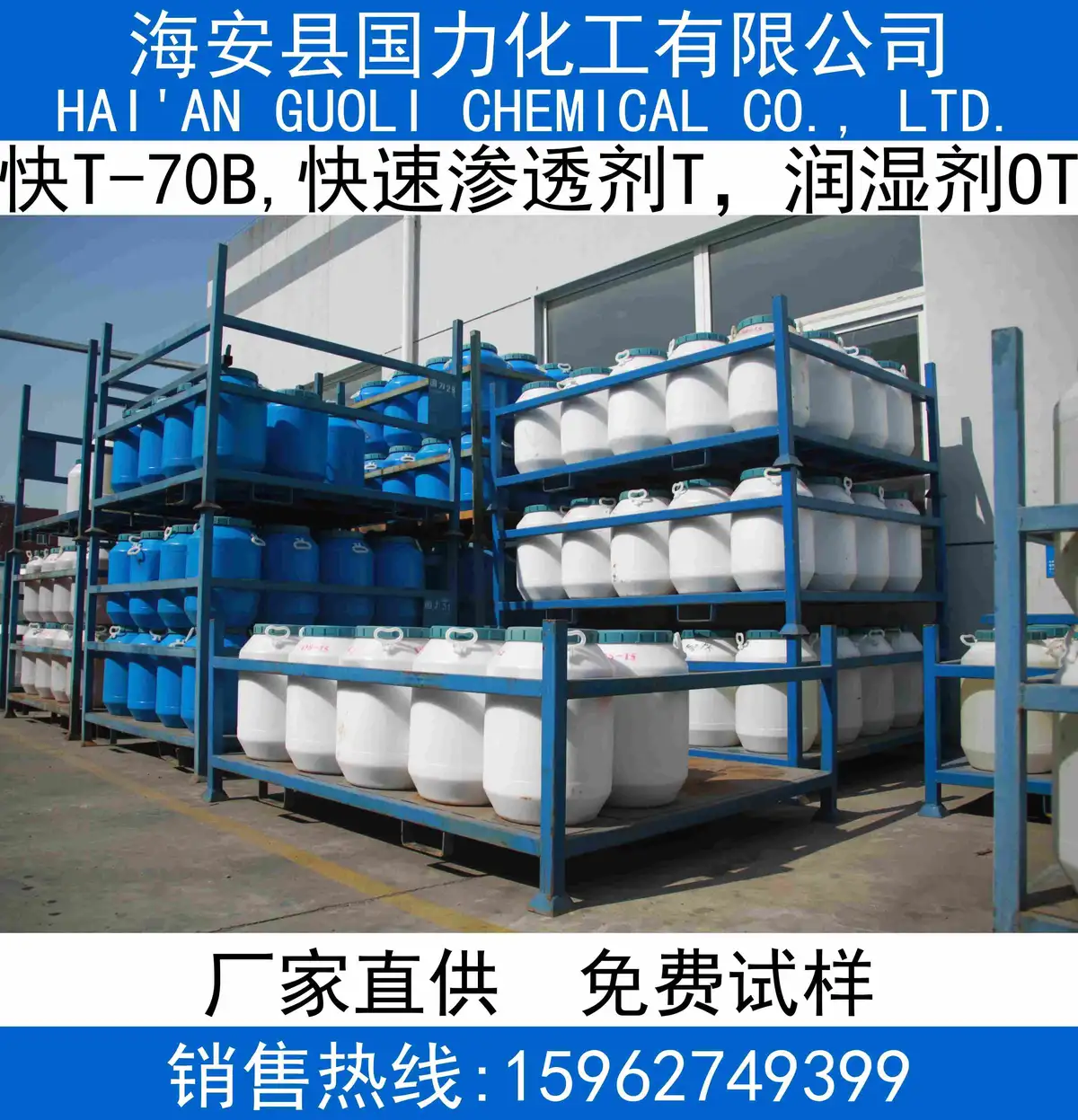
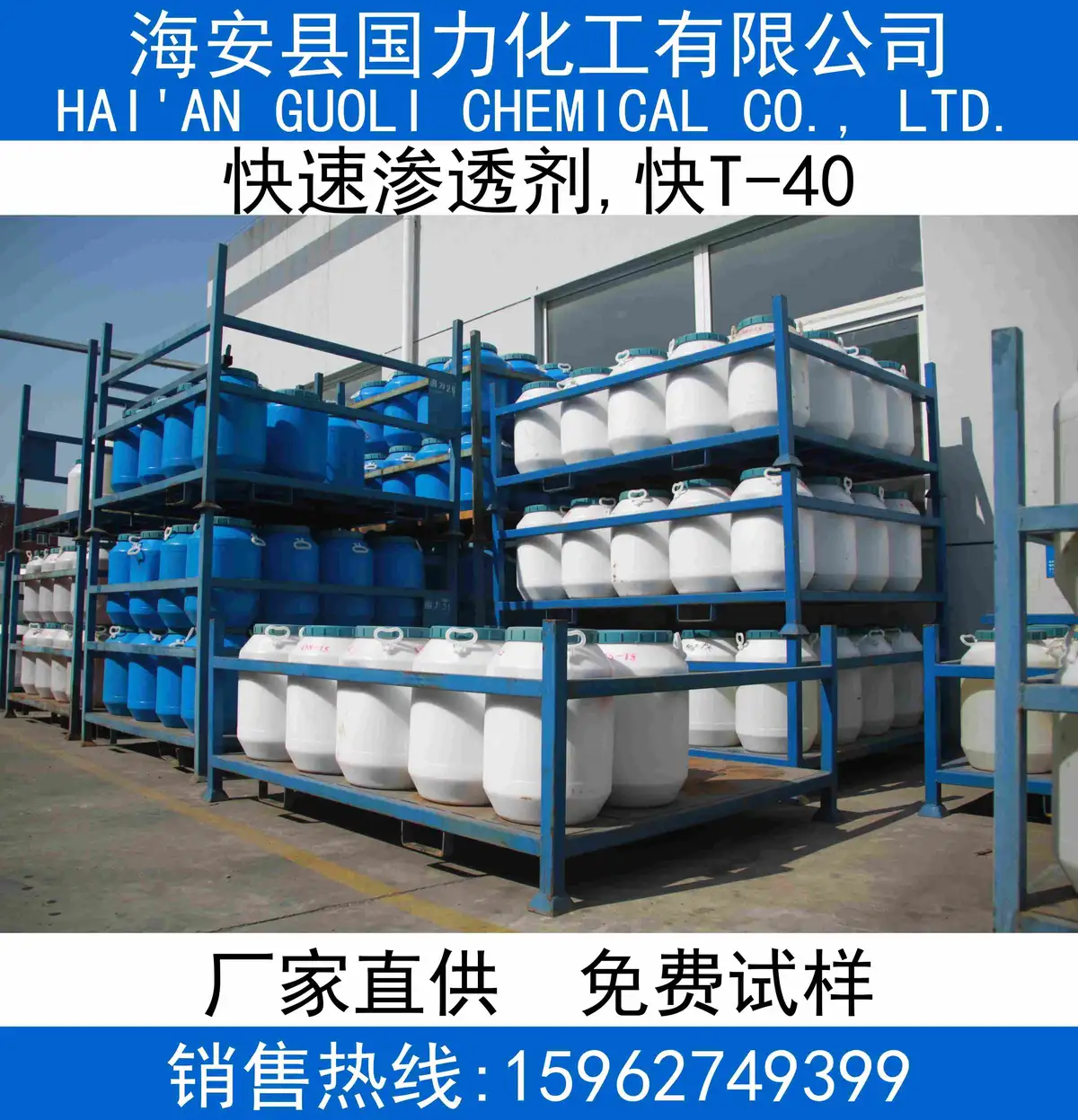
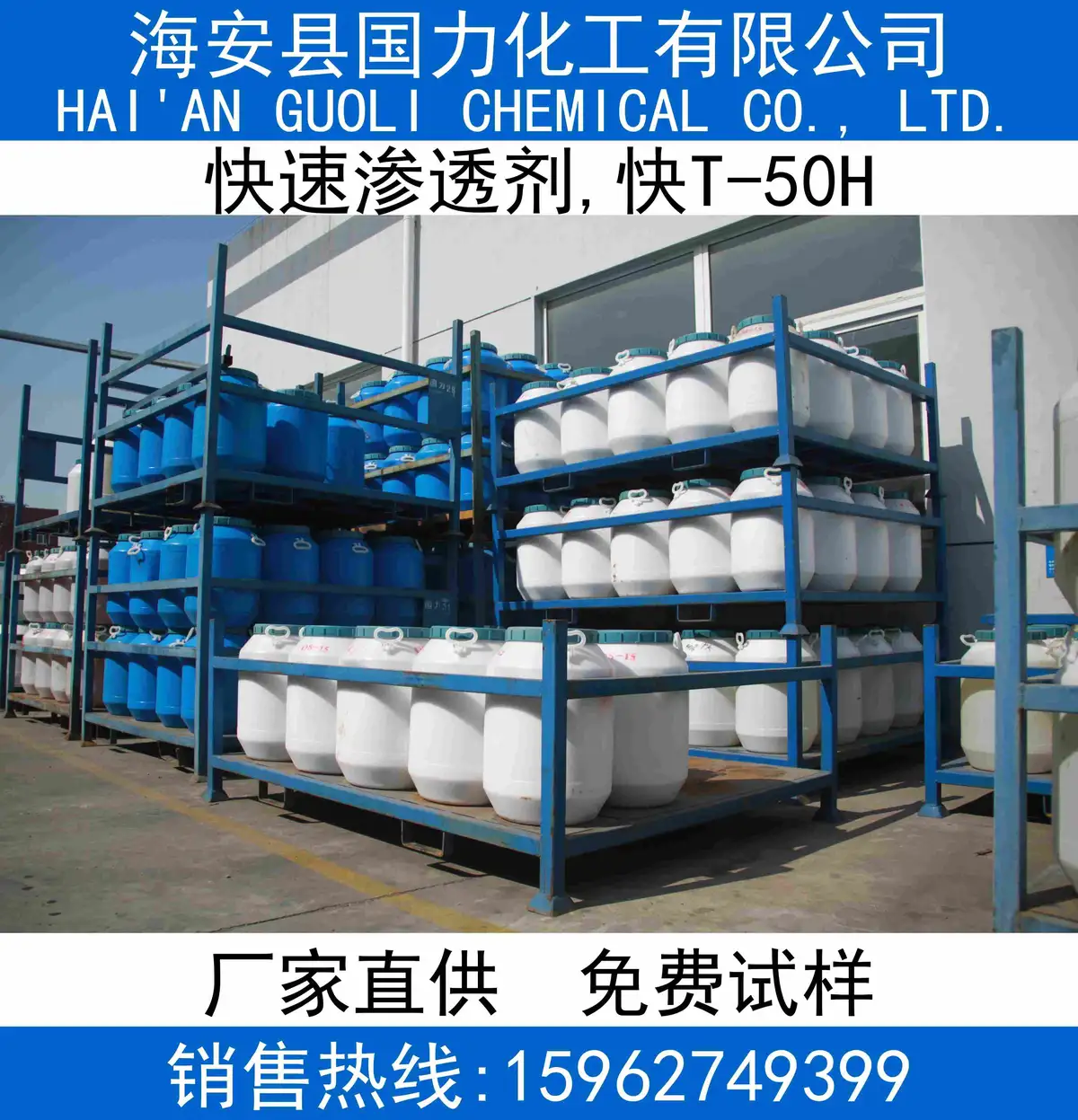
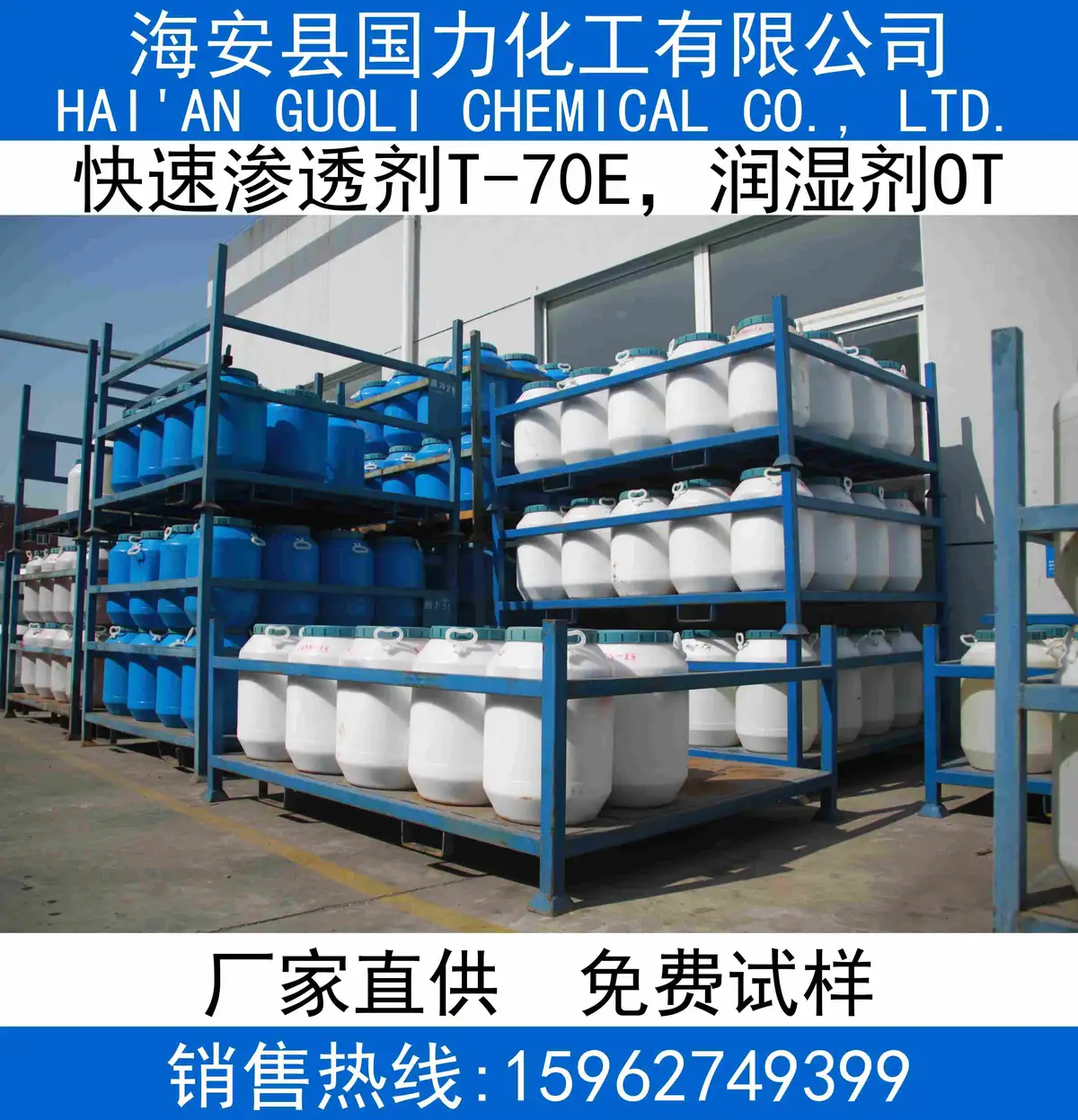
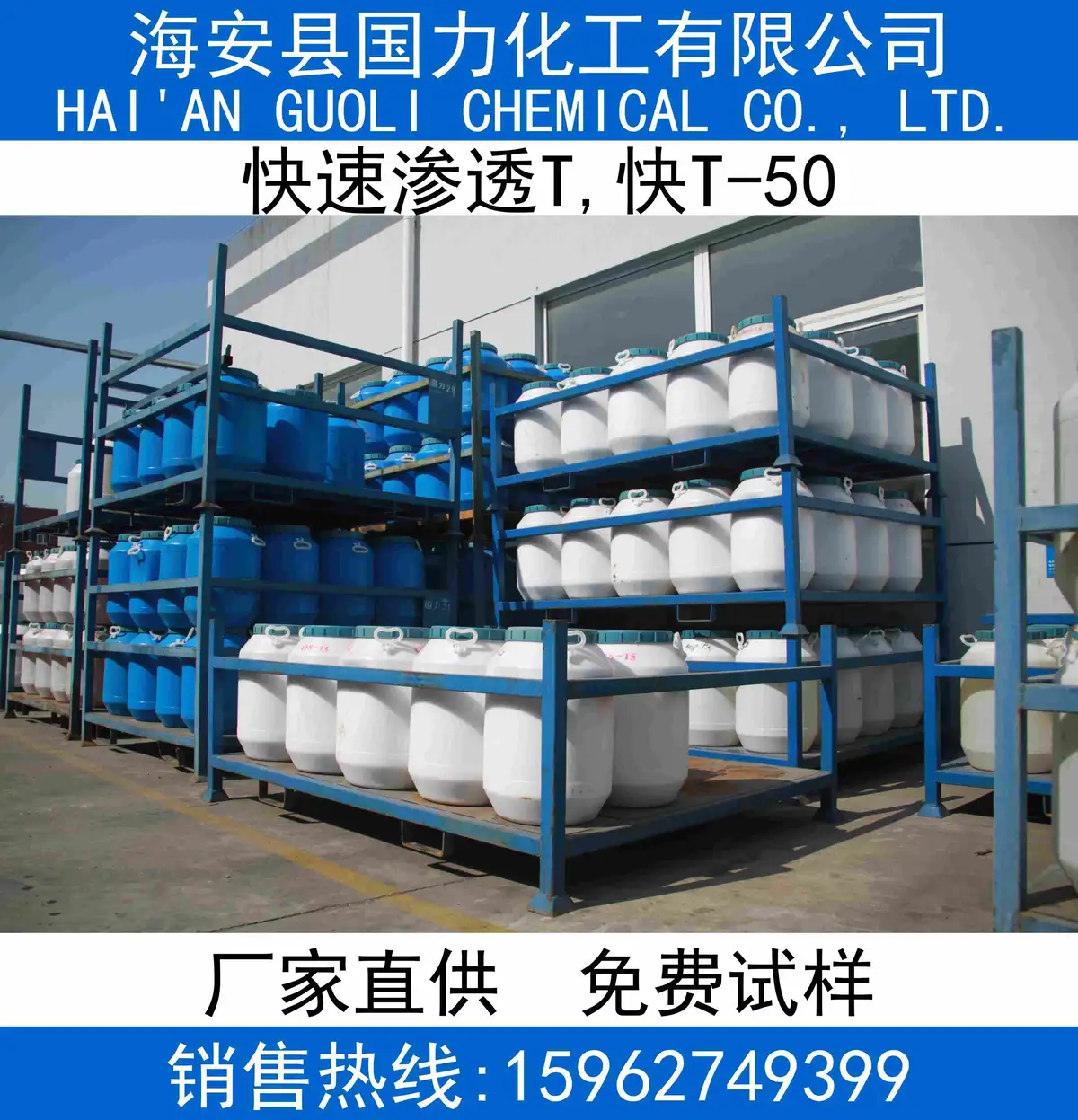
50kg plastic drum, 200kg plastic drum, IBC tote.
| Property | Value |
|---|---|
| CAS No. | 577-11-7 |
| Molecular Formula | C20H37NaO7S |
| Appearance | Colorless to pale yellow transparent liquid |
| Ionic Type | Anionic |
| Avg. Molecular Weight | 444.56 |
| Active Content | 50%~75% |
| pH Value(1%) | 5.0~7.0 |
| pH Value(5%) | 5.0~7.0 |
| Solubility | Readily soluble in water |
| Surface Tension | ≤30 |
| CMC | ~0.1~0.4 g/L |
| Acid Value | ≤1.5 |
| Saponification Value | ~252 |
| Moisture | ≤50% |
| Density | ~1.10 |
| Kinematic Viscosity | ~200-400 mm²/s |
| Refractive Index | ~1.445 |
| Flash Point | >100 °C |
| Hygroscopicity | Hygroscopic |
| Chemical Stability | Resistant to acids, alkalis and hard water |
| Penetration | ≤5 s (0.5% aq., canvas disc) |
| Foam Property | Low foam |
| Alkali Resistance | Alkali resistant |
| Viscosity | ~200-400 mPa·s |
| Diester Content | ≥95% (pure active basis) |
| Low Shear Viscosity | ~200-400 mPa·s |
| Solid Content | ≥50% |
| Free Alcohol | ≤0.5% |
| Heavy Metal | ≤20 mg/kg |
| Arsenic | ≤2 mg/kg |
Signal: Warning
Wear protective gloves and goggles. Ensure adequate ventilation. Avoid eye and skin contact. Wash thoroughly after handling. Do not eat, drink or smoke during operation.
Store in a cool, dry, well-ventilated area. Keep container tightly closed. Keep away from strong oxidizers, strong acids and alkalis.
Skin: Remove contaminated clothing. Wash with soap and water for at least 15 minutes. Seek medical attention if irritation persists.
Eyes: Rinse immediately with plenty of water for at least 15 minutes. Seek medical attention.
Inhalation: Move to fresh air. Seek medical attention if symptoms persist.
Ingestion: Rinse mouth. Do NOT induce vomiting. Drink water. Seek medical attention.
Spills: Absorb with inert material (sand, vermiculite). Collect in sealed containers. Dispose according to local regulations.
Fire: Use water fog, foam, dry powder or CO2. Firefighters wear SCBA.
Products you may be interested in